Venture Philly Group | Philadelphia Realtors

Own a Historic Home in Philadelphia: A Guide to Architectural Styles

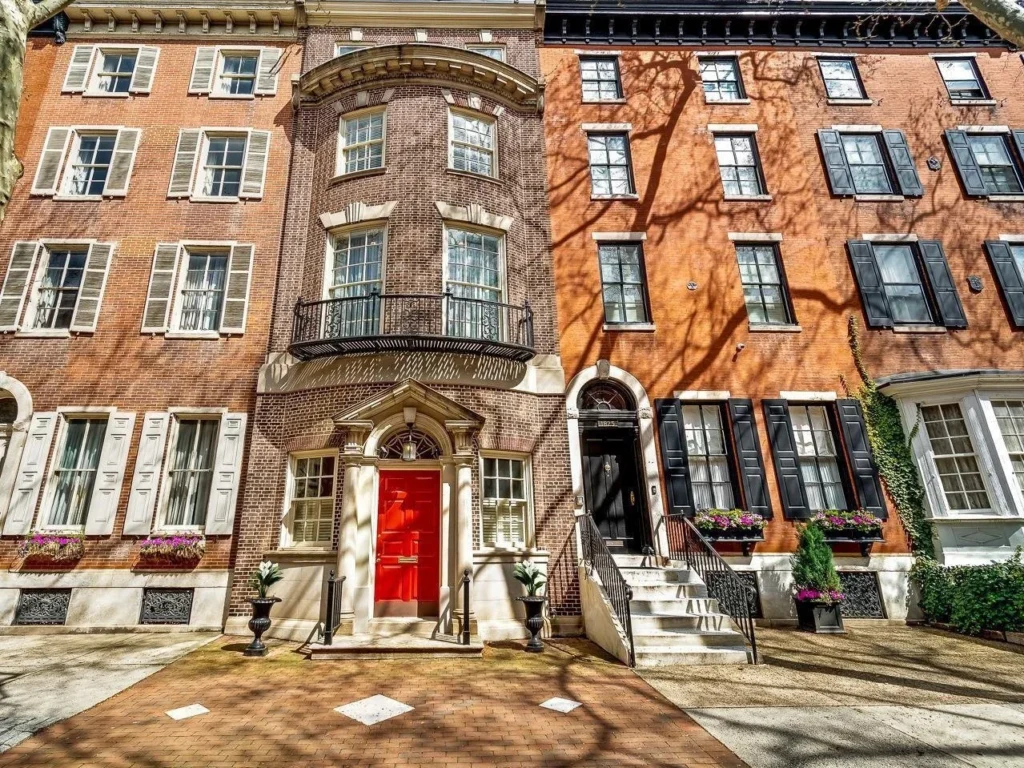
Beautiful 1861 Townhome with the red door in the Heart of Rittenhouse on Dalcey street

Philadelphia is a city steeped in history, with streets that serve as a living museum of American architecture. From centuries-old stone colonials to ornate Victorian townhomes, the city showcases an impressive variety of historic residential styles. Many of these can still be found in Philadelphia most historic neighborhoods. This guide will help you understand the key architectural styles that define Philly’s rich housing legacy.

What Is Considered a Historic Home?

A historic home is typically defined as a residential property that is at least 50 years old and possesses architectural, cultural, or historical significance. These homes often reflect the design, craftsmanship, and materials of their era and may be associated with important events, people, or architectural movements.

In Philadelphia, a home doesn’t have to be officially registered as historic to be considered historically significant. However, some properties are listed on the Philadelphia Register of Historic Places or the National Register of Historic Places, which can provide protections and preservation incentives. Whether formally recognized or not, many of Philly’s older homes contribute to the city’s rich architectural fabric and deserve thoughtful stewardship.

Explore Philadelphia’s Historic Homes: Architectural Styles and Where to Find Them

Unfortunately, many historic homes are often misclassified or listed without any reference to their architectural style. That’s why our mission is to help deepen awareness, appreciation, and respect for the city’s architectural heritage.

The photos included in this article showcase actual historic homes that have recently been on the market.

Prices for these homes vary widely — from around $300,000 to over $5 million — depending on the neighborhood, square footage, and, most importantly, the level of preservation and originality in the home’s historic features.

Let’s dive into some historic home architectural styles in Philly…


Georgian Architecture in Philadelphia

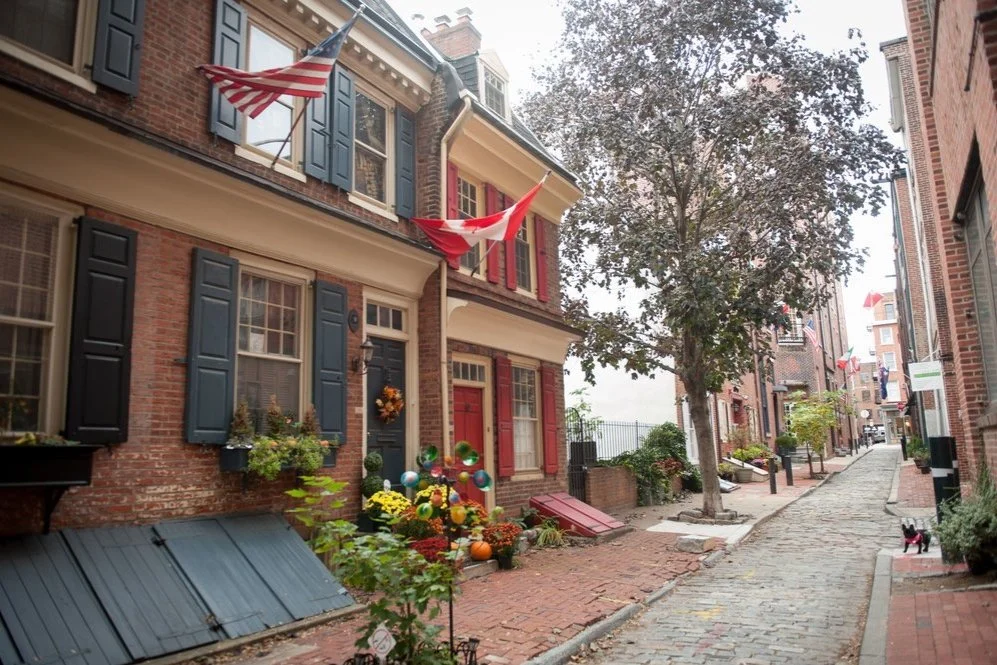
georgian style home with green accents

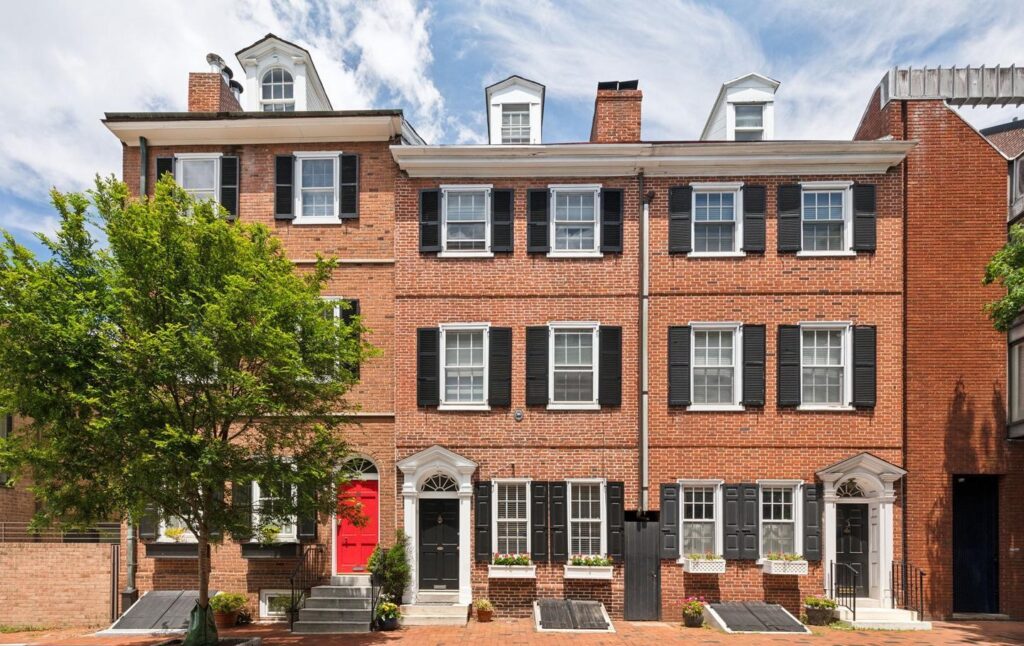
1857 Georgian-style townhome, Washington Square, Philadelphia, PA

Georgian-Style Townhouse, Old City, Philadelphia

Georgian homes are characterized by symmetrical facades, evenly spaced multi-pane sash windows, brick or stone construction, paneled doors with decorative crowns (entablatures), and gable or hipped roofs. Interiors often feature elegant fireplaces and detailed crown molding. These homes reflect classical ideals of balance and proportion; however, some say that ceilings are a bit lower compared to Federal-style homes.

Notable Neighborhoods
Society Hill and Old City—two of Philadelphia’s most walkable neighborhoods—are prime locations to find well-preserved Georgian-style homes.


Philadelphia Federal-Style Architecture

Society Hill Philadelphia Federal-Style Architecture: Historic Homes 1780–1820

Federal-Style Townhouse, Society Hill, Philadelphia

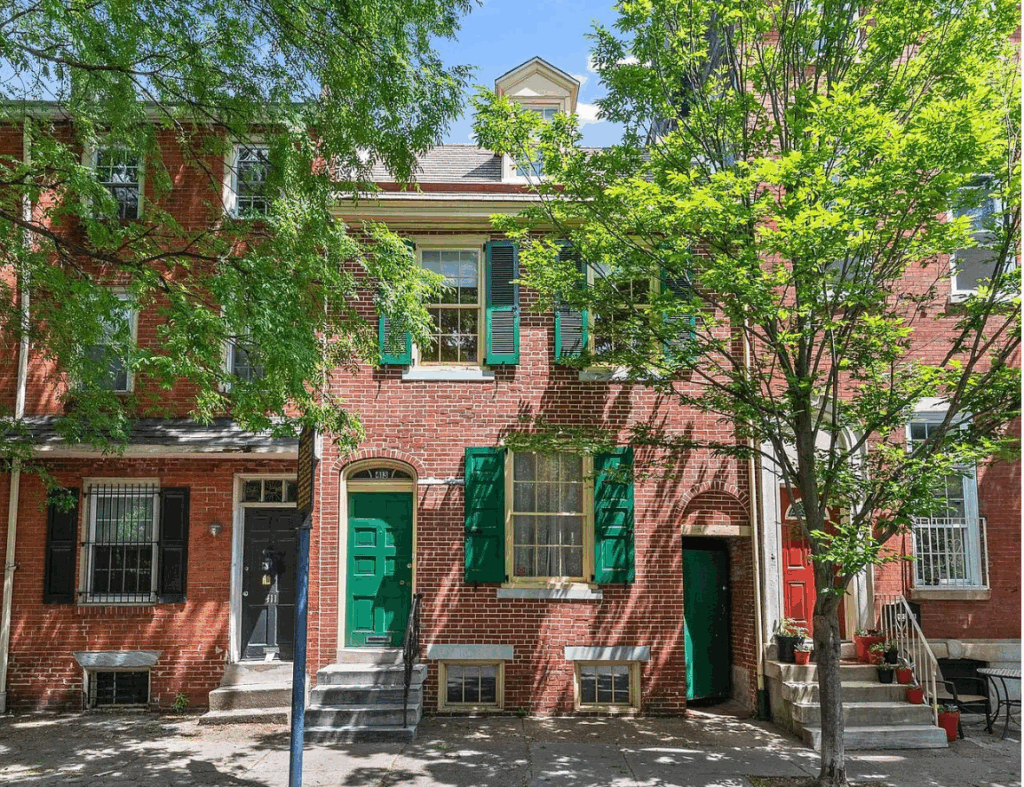
Built in 1861, this Federal-style row home is located on the tree-lined Delancey Place in the heart of Rittenhouse.

Federal-style homes exhibit more refined and delicate details than Georgian homes. They typically have smooth brick facades, elliptical or fan-shaped windows above paneled doors, sidelights, and decorative ironwork. Interiors may feature oval-shaped rooms and curved staircases. The style emphasizes elegance and lightness.

Featured Home (second picture) is one of the most unique homes in Philadelphia for sale in 2025: 1827 Delancey Place.  Built circa 1861 and thoughtfully updated for modern living, this stately four-bedroom, four-full-bathroom, two-half-bath brick townhouse offers nearly 6,000 square feet of refined elegance.

Notable Neighborhoods: Examples of Federal architecture can be found in Society Hill and Queen Village.


Victorian Architecture Homes in Philadelphia

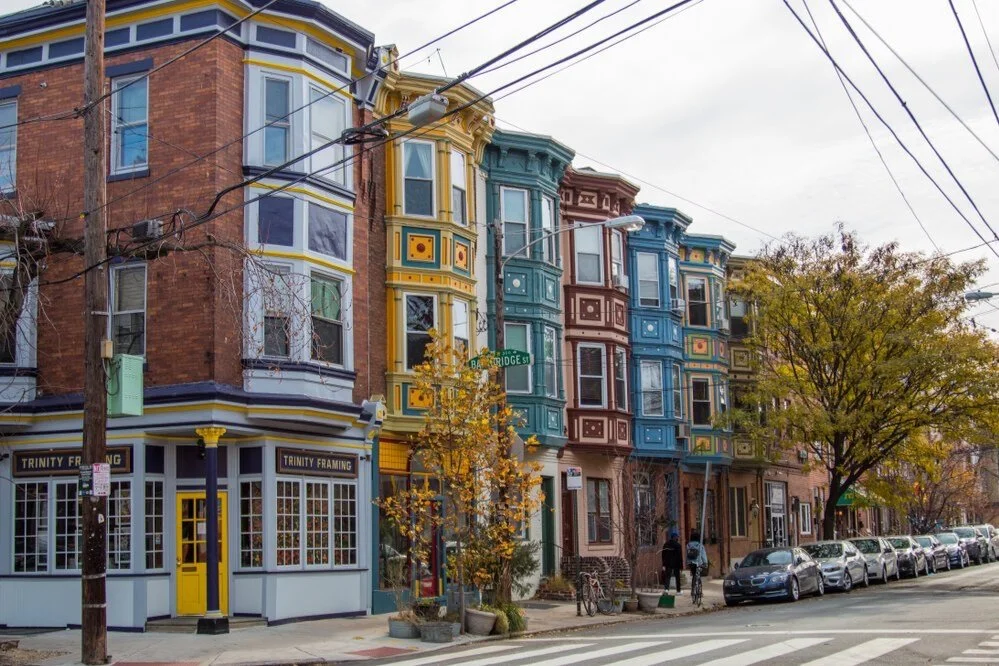
colorful Victorian-style Rowhomes, Queen Village, Philadelphia

Victorian-style Rowhomes, Queen Village, Philadelphia

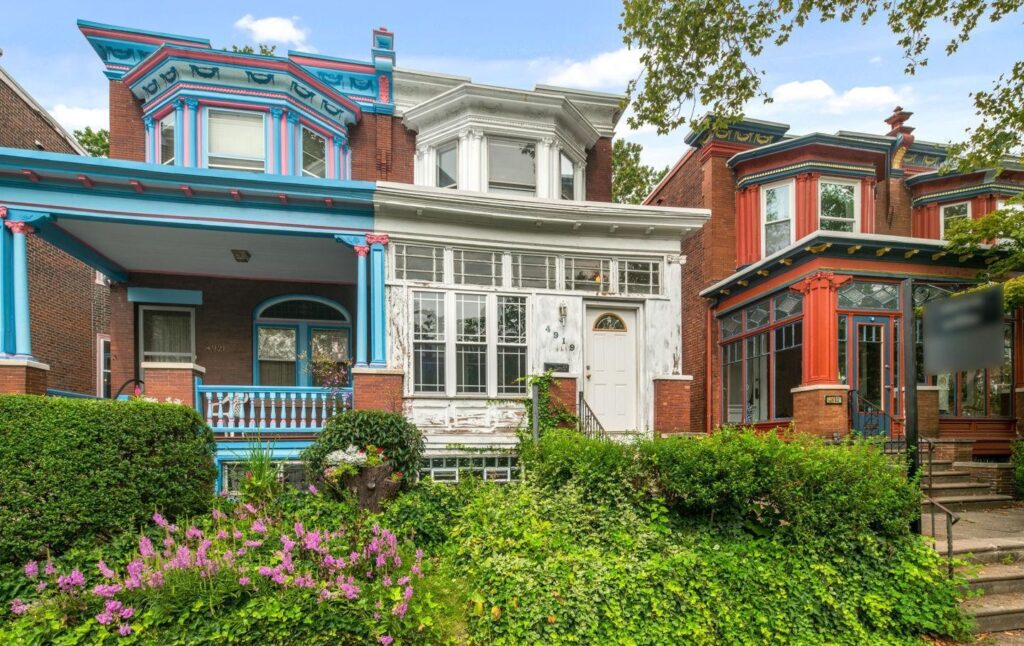
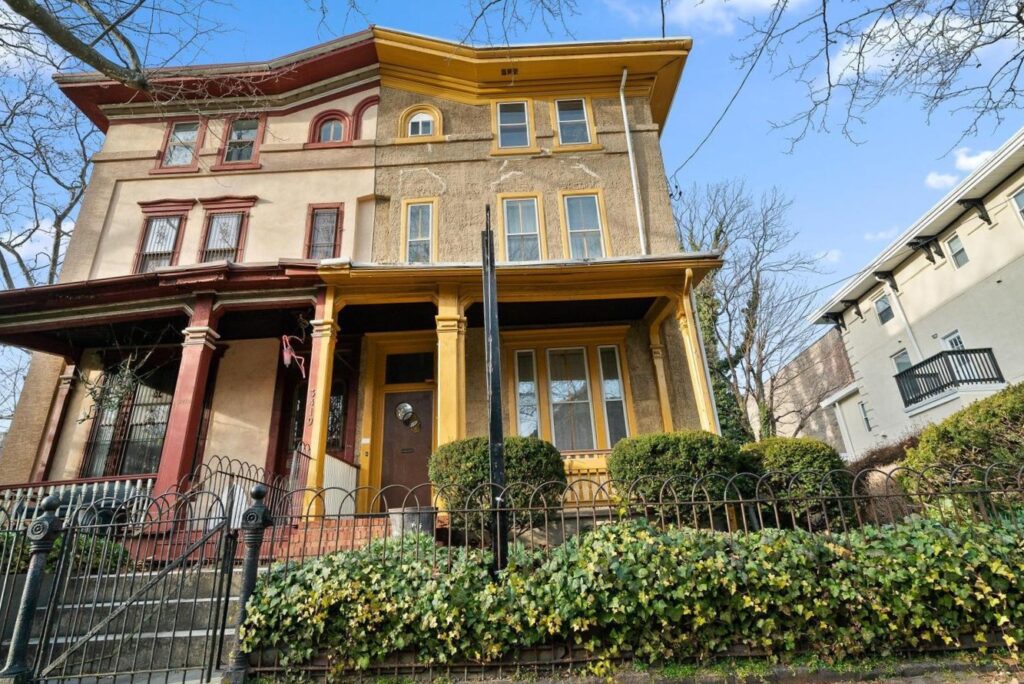
Victorian style townhomes, West Philly, Philadelphia

Victorian architecture in Philadelphia encompasses several substyles, including Gothic Revival, Queen Anne, and Second Empire. These homes are highly sought after for their charm, character, and historic significance.

They often feature intricate woodwork, asymmetrical facades, steeply pitched roofs, bay windows, towers or turrets, patterned shingles, and vibrant color palettes. Inside, Victorian homes are rich in ornamentation, with decorative trims, stained glass, and ornate fireplaces, creating a unique and elegant living experience.

Notable Neighborhoods: Rittenhouse Square and the 4100 block of Parkside Avenue in West Philadelphia showcase impressive Victorian mansions, making these areas especially desirable.


Colonial Stone Historic Homes in Philadelphia

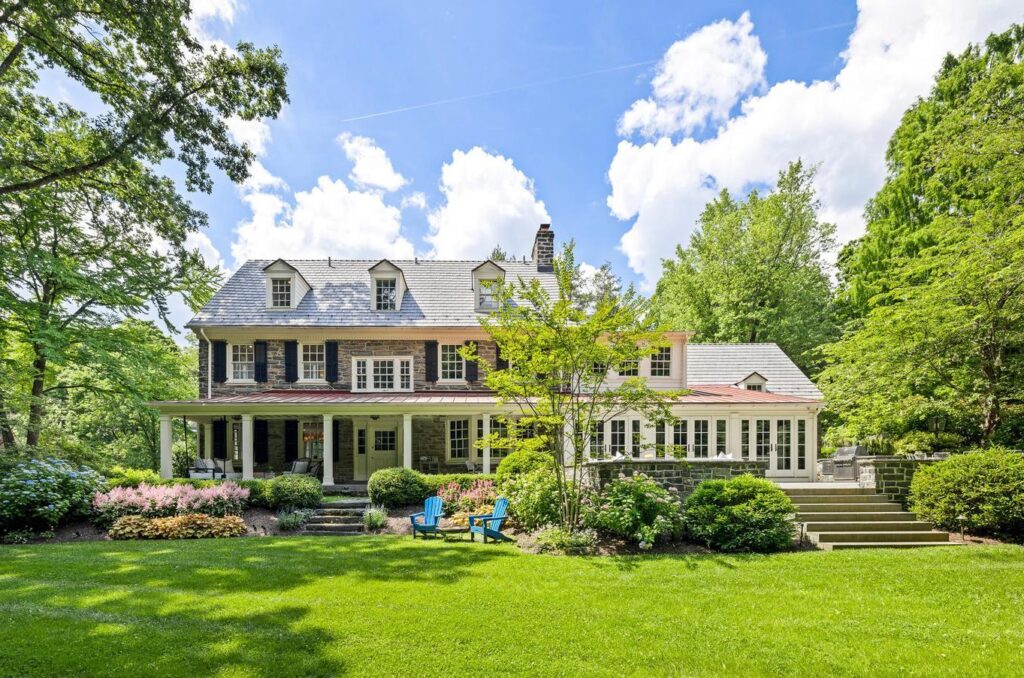
Colonial Stone Home architectural style, Chestnut Hill, Philadelphia from a far

Colonial Stone Home architectural style, Chestnut Hill, Philadelphia

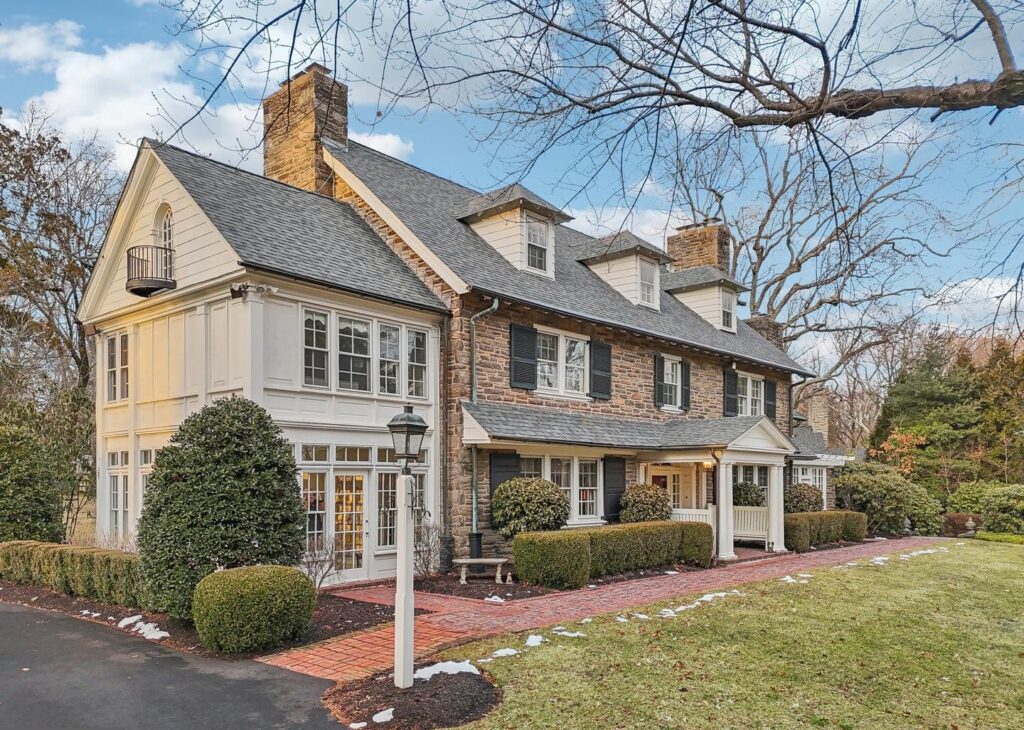
1920 Colonial Stone House, Jenkintown, PA

Colonial stone homes are known for their thick stone walls, symmetrical front facades, shuttered windows, gabled roofs, and central chimneys. Often built in the 18th century, these homes offer a rustic charm and durability. Interiors typically include exposed wood beams, wide-plank floors, and large hearths.

Notable Neighborhoods: Chestnut Hill and Mount Airy are renowned for their colonial stone residences. While less common in the city center, Colonial stone homes are especially popular in Philadelphia’s suburbs.


Industrial Era Row Homes in Philadelphia

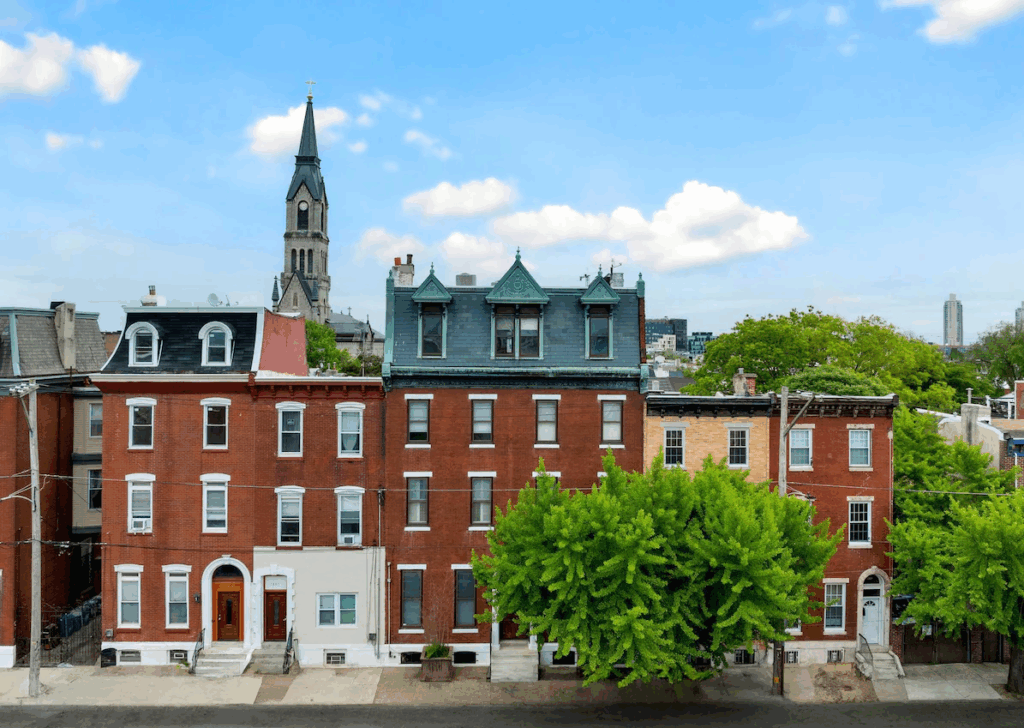
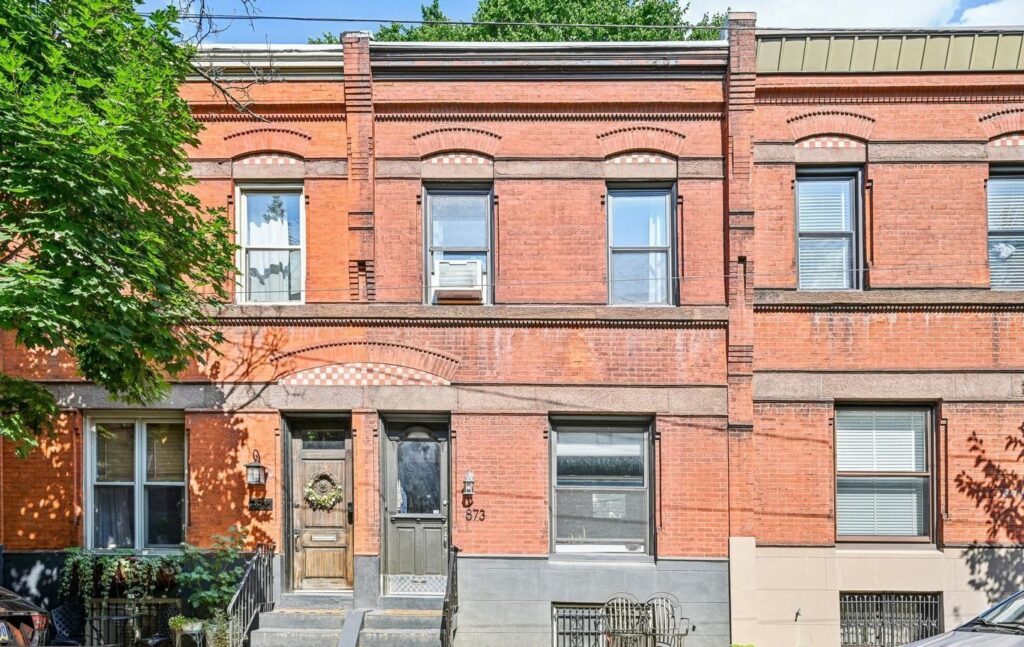
Industrial-era rowhouses, Northern Liberties, Philadelphia

Industrial-era rowhouses, Northern Liberties, Philadelphia

Industrial-era rowhouses, Northern Liberties, Philadelphia

Industrial-era rowhouses, Northern Liberties, Philadelphia

Built during Philadelphia’s industrial boom, these brick row homes were designed for the working class. They often feature two to three stories, flat or low-pitched roofs, simple ornamentation, narrow footprints, and small front stoops. Interiors are compact but practical. Many have since been updated for modern living.

Notable Neighborhoods: Northern Liberties and Fishtown neighborhood are areas where industrial-era row homes are prevalent.


Italianate Historic Homes in Philadelphia

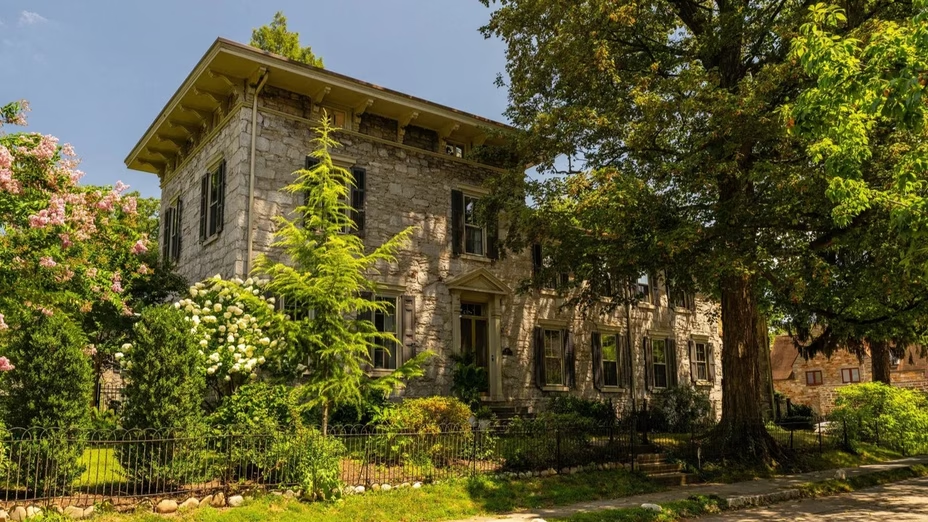
1859 Italianate-style home, University City, Philadelphia

1859 Italianate-style home, University City, Philadelphia

Stone Italianate Stunner in Philadelphia’s Chestnut Hill Lists for Nearly $2.2 Million in 2025

Italianate homes are inspired by Italian Renaissance villas. They are recognized by their low-pitched or flat roofs, overhanging eaves with decorative brackets, tall and narrow windows often with arched or curved tops, and elaborate doorways. Interiors may feature high ceilings, ornate plasterwork, and marble mantels.

Notable Neighborhoods: Examples of Italianate architecture can be found in areas like Washington Square West and parts of South Philadelphia.

 

Beaux-Arts Architecture Homes in Philadelphia

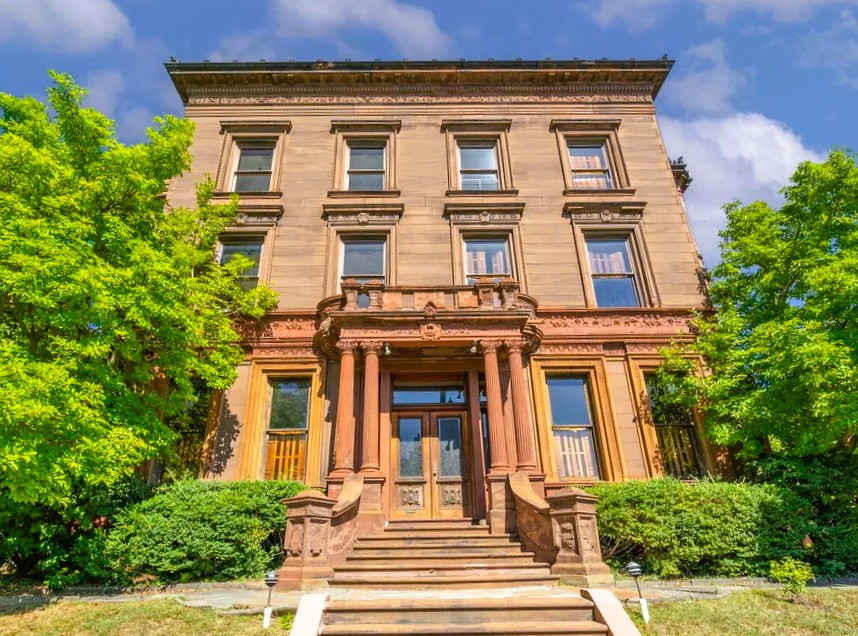
Bergdoll Mansion, Spring Garden, Philadelphia
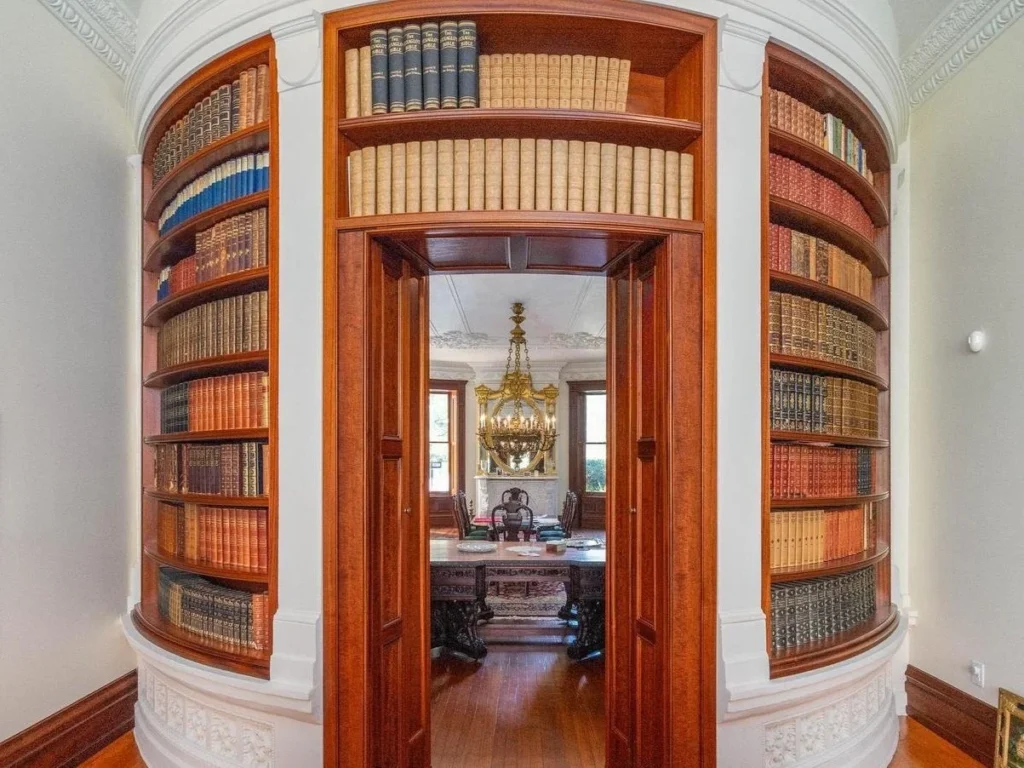
Bergdoll Mansion library

Beaux-Arts architecture is grand and theatrical, drawing heavily from classical Roman and Greek influences. These homes often feature symmetrical facades, columns, pilasters, arched windows and doors, and extensive ornamentation such as garlands and stone carvings. Interiors are lavish, with marble floors, grand staircases, and detailed moldings. Unlike other historic home styles in Philadelphia, Beaux-Arts residences are rare and highly sought after, offering a unique opportunity for discerning buyers, though they can be more challenging to maintain.

Featured Home: One of the most unique homes in Philadelphia for sale in 2025 Beaux-Arts property at 2201 Green St, Philadelphia, PA 19130, is listed for $5,575,000. The mansion offers 9 bedrooms, 9 bathrooms, and 13,900 sq ft of luxurious living space, with an estimated monthly cost of $33,912.

Notable Neighborhoods: Significant Beaux-Arts structures are primarily found in Center City, including prominent public buildings and select residential properties

What It’s Like to Own a Historic Home

Owning a historic home can be an exciting and rewarding experience, especially if you love history and architecture. However, like any big investment, there are some things you should consider before purchasing one.

What Are The Benefits of Owning a Historic Home?


  • Owning a Piece of History
    For many, buying a historic home is an emotional investment. These homes are unique, offering architectural beauty and a strong connection to the past. They provide a sense of owning something with character and charm that can’t be replicated in modern homes.


  • Being Part of a Historic Community
    When you buy in a historic district, you join a community that values preservation. You’re surrounded by neighbors who share your commitment to maintaining the neighborhood’s heritage, which adds to the area’s charm and stability.


  • Higher Return on Investment
    Well-maintained historic homes, especially in popular neighborhoods, often see their values increase over time. Homes in historic districts tend to appreciate faster than new builds, making them a solid long-term investment.


What Are The Downsides of Owning a Historic Home?


  • Stricter Regulations
    Owning a historic home means you’ll need to follow specific rules about repairs and alterations. In some areas, you may need permission to make any changes to the exterior, and the regulations can be stricter than typical homeowners associations (HOAs).


  • Complicated and Costly Renovations
    Restoring a historic home can be more expensive and time-consuming than renovating a modern house. You might need specialized materials, and approval for work can take longer due to preservation rules. Additionally, repairs can be frequent and costly.


  • Difficulties with Financing and Insurance
    Getting a loan or insurance for a historic home can be more challenging. Lenders may be hesitant to approve loans for older homes, and finding insurance can be tricky since repairs may need expensive, specialized materials. It’s important to secure financing and insurance options before buying.

Is Owning a Historic Home in Philadelphia Right for You?

Owning a historic home can be a unique and rewarding experience, but it’s important to consider both the pros and cons. Be ready for extra work and costs, but you’ll also enjoy the satisfaction of preserving a piece of history and living in a neighborhood with character.

Many of our clients prefer historic homes that are well-preserved but have modern amenities, like updated kitchens and bathrooms. However, homes that aren’t as updated can be found at much lower prices.

So, if you appreciate homes with character and are ready to put in the effort to keep it original, go for it!

We hope this guide to understanding historic homes in Philadelphia helps you appreciate their unique charm, architectural details, and long-lasting value. 

Please note: many historic homes are often mislabeled, not officially recognized as historic, or have undergone upgrades that diminish their original historic value. 

To help you become the owner of a historic home, fill out the contact form with the subject line ‘Historic Home,’ or reach out to Antonio Atacan, a Society Hill local realtor, resident, and owner of a beautiful historic home.

For suggestions or improvements to this article, please email us at ma*******@***********ly.com.

Table of Contents

Scroll to Top