
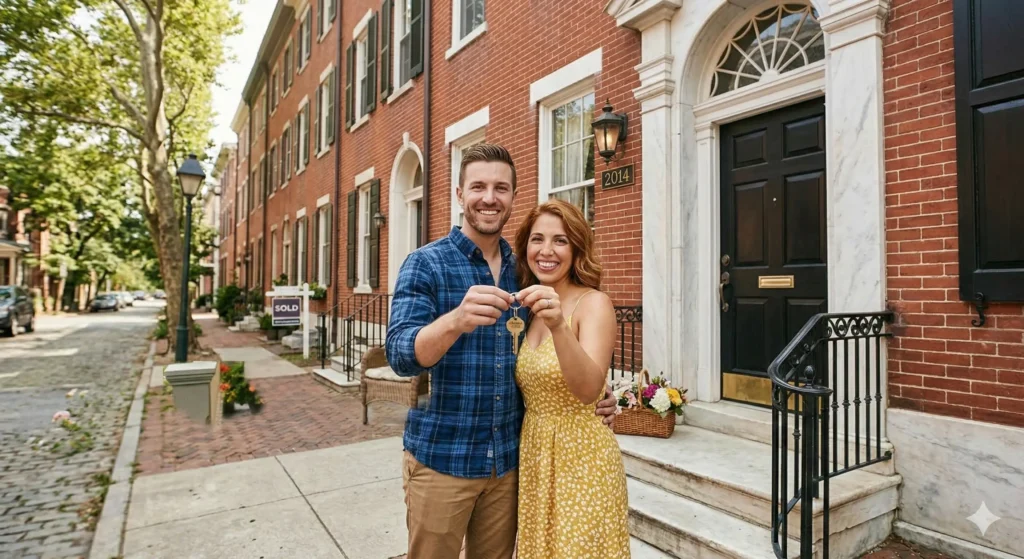
Closing day is exciting… especially if you are a first-time homebuyer. But there are still a few important things to take care of right after settlement.
If you just bought a house in Philadelphia, these steps will help you stay organized, protect your property, and avoid future headaches.
Here’s what new homeowners should do right after closing.
1. Save copies of your closing documents
After closing, you’ll receive several important documents. These include your settlement statement, mortgage paperwork, deed information, and tax documents.
Keep copies of these documents in a safe place.
A good option is a fireproof file box or safety deposit box. You should also keep digital copies in case something happens to the paper version.
If you don’t have a scanner, you can:
- Use a mobile scanning app like Adobe Scan
- Scan documents at your local library
- Take clear photos and save them as PDFs
Store your files securely on cloud storage like Google Drive or Dropbox. That way you’ll always have backup copies if needed.
2. Apply for the Philadelphia homestead exemption
After buying a home, it’s a good idea to check if you qualify for any programs that can reduce your Philadelphia property taxes. The city offers several tax relief programs that may lower how much you pay each year.
One of the most common programs is the One of the most common programs is the Philadelphia Homestead Exemption. This program reduces the taxable value of your primary residence, which lowers your property taxes. In many cases, homeowners save around $1,300 per year on real estate taxes.
To qualify:
- You must own the home
- The home must be your primary residence
⚠️ Important:
If your property currently has a 10-year tax abatement, you cannot receive the Homestead Exemption until the abatement expires.
3. Set Up Utilities
Before or immediately after closing, make sure utilities are transferred into your name. You’ll want service to start on your closing date, so there’s no interruption.
Utilities to contact may include:
- Electric (PECO)
- Gas (PGW)
- Water
- Trash and recycling
- Internet
- Cable or satellite
Setting up automatic payments through your bank is also a good idea so you never miss a bill.
4. Change the Locks
You may receive several keys from the seller on closing day — but you never know how many extra copies exist.
For peace of mind, it’s smart to change all locks immediately.
This includes:
- Front and back doors
- Side entrances
- Garage doors
- Storage sheds or detached garages
Also remember to:
- Reset garage door openers
- Change keypad entry codes
- Update smart lock settings if the home has them
This simple step helps keep your new home secure.
5. Update Your Address
After moving, update your address with important institutions to make sure you continue receiving bills, tax documents, and important mail.
Start with these accounts:
Financial accounts
- Bank accounts
- Credit cards
- Investment accounts
Insurance providers
- Health insurance
- Auto insurance
- Life insurance
- Home insurance
Loans
- Student loans
- Car loans
- Personal loans
Government agencies
- IRS
- Social Security Administration
- USPS mail forwarding
- Department of Motor Vehicles
Other services
- Streaming services
- Subscriptions
- Healthcare providers
- Your employer
Updating your address prevents lost mail, identity issues, and missed payments.
6. Update your driver’s license
Most states require you to update your driver’s license or ID after moving.
In Pennsylvania, it’s best to update your address as soon as possible so your identification reflects your current residence. You’ll also need your correct address for:
- Voter registration
- Vehicle registration
- Insurance records
Updating your ID helps keep your records consistent across government agencies.
7. Get to know your neighborhood
Once you move in, take time to explore your new neighborhood.
Find nearby essentials such as:
- Grocery stores
- Pharmacies
- Restaurants and coffee shops
- Parks and recreation spots
It’s also helpful to research reliable local professionals before you need them. Try asking neighbors for recommendations for:
- Plumbers
- Electricians
- HVAC technicians
- Handymen
It’s much easier to find help before an emergency happens. It’s a good idea to ask your Philadelphia realtor for these contacts.
8. Remove your home from Zillow
After your purchase, your home may still appear on websites like Zillow or Redfin with photos from the previous listing.
If you prefer more privacy, you can:
- Claim your home profile
- Remove interior photos
- Limit public information about your property
Many homeowners choose to do this to prevent strangers from seeing the layout of their home online. Ask your Philadelphia realtor to remove these pictures from the MLS—this means they will be removed from all platforms.
Final Thoughts
Buying a home in Philadelphia is a huge milestone, and closing day is just the beginning.
By taking care of a few important tasks — like securing your home, setting up utilities, applying for tax programs, and organizing your documents — you can start homeownership with confidence.
A little preparation now can save you time, money, and stress later.